Home Mold Remediation HVAC Mold Removal · Pueblo, CO
Serving Pueblo, CO
Pueblo County & Southern Colorado

HVAC Mold Removal in Pueblo, CO.

Plenty of Pueblo houses cool with a swamp cooler in summer and heat with a gas furnace in winter, and both move air through ducts that can hold on to moisture. Jim and Karen find where mold has settled in that system and treat it without opening the ducts in most homes.

5.0/5 Stars on
Google Reviews
Lab-tested Air samples before
and after treatment
One visit For most treatments,
home that evening
Owner-operated in Pueblo Jim and Karen Blagg
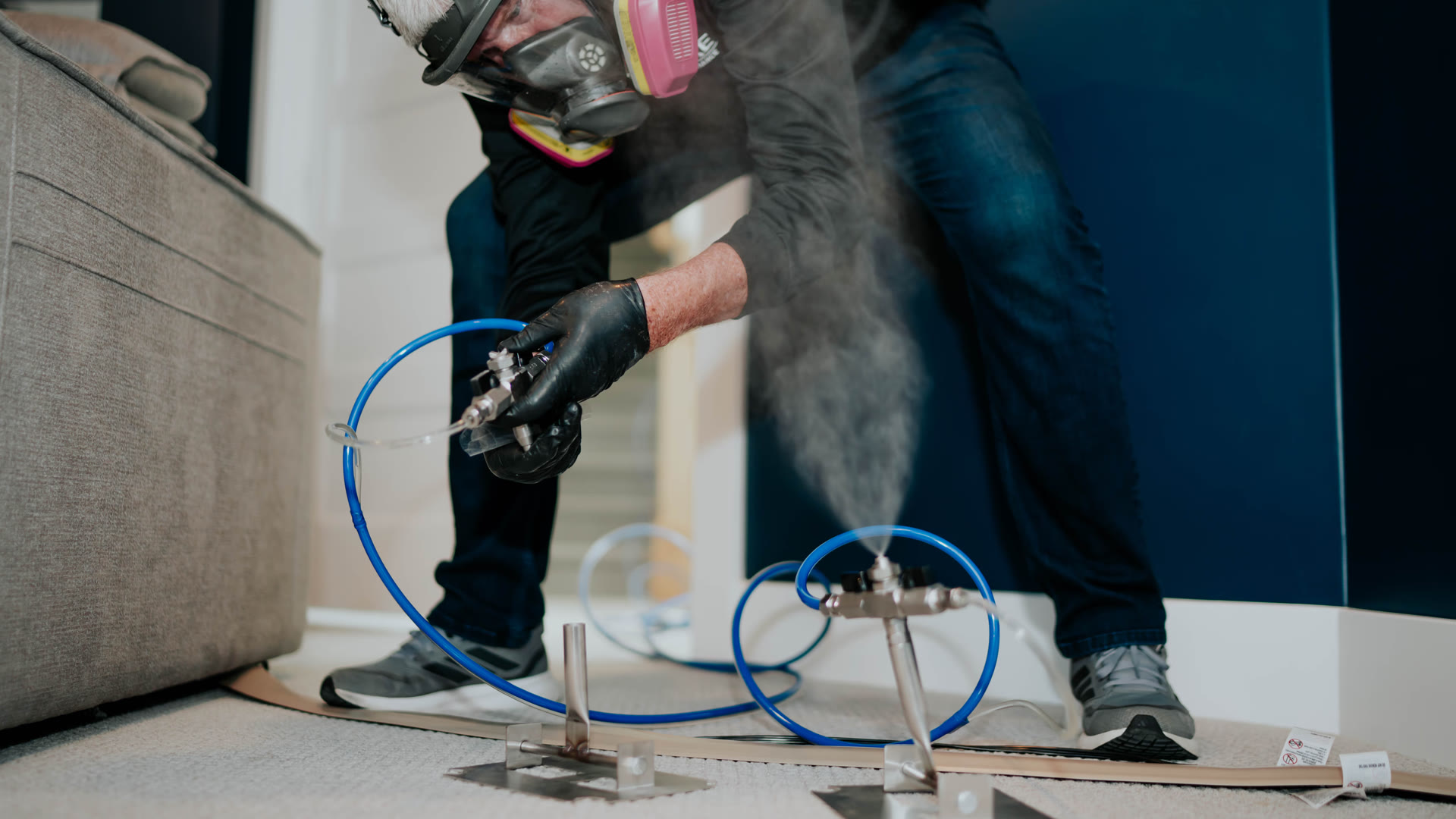
VaPURE treatment vapor rising from a nozzle inside a home

"Jim and Karen of Pure Maintenance of Pueblo were professional in every sense of the word. They communicated well, were timely, thorough and very knowledgeable. We were pleased with the service and are happy to report that their testing, recommendations and product application was a complete success."

Tate Rusk · Google review

Coolers, furnaces and ducts

A dry climate, damp ductwork.

A musty smell that shows up when the cooler or furnace kicks on is a common reason people call Jim and Karen about HVAC mold removal in Pueblo, CO.

Summer air here is dry, which is why so many houses cool with an evaporative cooler. The cooler works by adding water to the air it blows inside. Some of that moisture settles in the duct runs and behind the registers, where it can sit long enough for mold to grow.

Jim and Karen don't repair coolers or replace ductwork. Once whoever services your cooler or HVAC system has fixed the source of the water, they treat the mold. If a section of duct is too far gone, they'll tell you and point you to someone who handles that.
  • A musty smell at startup. It's strongest in the first few minutes after the cooler or furnace comes on, then fades.
  • Dark specks around a register. Look on the vent louvers and on the ceiling or wall right around a supply vent.
  • A stain under the cooler. A roof cooler and the duct it feeds are a common path for water into the ceiling below.
  • A smell that comes back. Mold was treated in one room, and the odor returned once the system ran again.
Verified Reviews

Trusted by homeowners across Pueblo County & Southern Colorado.

5.0/5 stars on Google. Every reviewer is a real client.

Swamp coolers

How a swamp cooler puts water in the house.

In the Census region that takes in Colorado, about 7% of homes cool mainly with an evaporative cooler, against 0.8% nationally (U.S. Energy Information Administration). Colorado State University Extension calls them well suited to Colorado and says they typically need more maintenance than air conditioners.

Pueblo averages about 72 days a year at 90°F or hotter, and Black Hills Energy still gives coolers credit in its 2026 Colorado Ready Home program. They will be on Pueblo roofs for a long while yet, so it pays to know where their water goes.

It adds water on purpose

The Department of Energy's guide to evaporative cooling says direct coolers "increase rather than decrease the humidity in the air." That damp air travels the ducts and leaves through the registers.

Roof units can leak

DOE warns that roof-mounted coolers "can lead to leaks in the roof," and they usually feed a duct that runs through the attic. Water that gets in around the unit often shows up as a stain on the ceiling below.

Standing water in the pan

DOE says to empty the drain pan whenever the cooler will sit idle for more than a few days. A pan that holds water through a cool spell sits right under the pads the fan pulls air through.

The damp air needs a way out

A cooler pushes outside air in, so the house needs a way to let it out. DOE calls for about 2 square feet of open window or ceiling vent for each 1,000 CFM the cooler moves. Without that, damp air can hang in closets and back rooms.

Drain and cover before the freeze

Pueblo Water's winter tips say to shut off the cooler's supply line, then disconnect and drain it. DOE adds a cleaned pan and a winter cover. The first fall freeze here comes around 9 October on average.

The switch to refrigerated air

Coolers lose their punch once July and August storms raise the humidity, and a Pueblo heating company wrote in 2025 that more local owners are switching to central air. Where the cooler and the air conditioner share ducts, damp dust from cooler season is still in the runs when the chilled air arrives.

Ducts and registers

Where the mold ends up.

Mold in an HVAC system tends to grow where damp air slows down and dust collects, which in most houses means a handful of predictable spots.

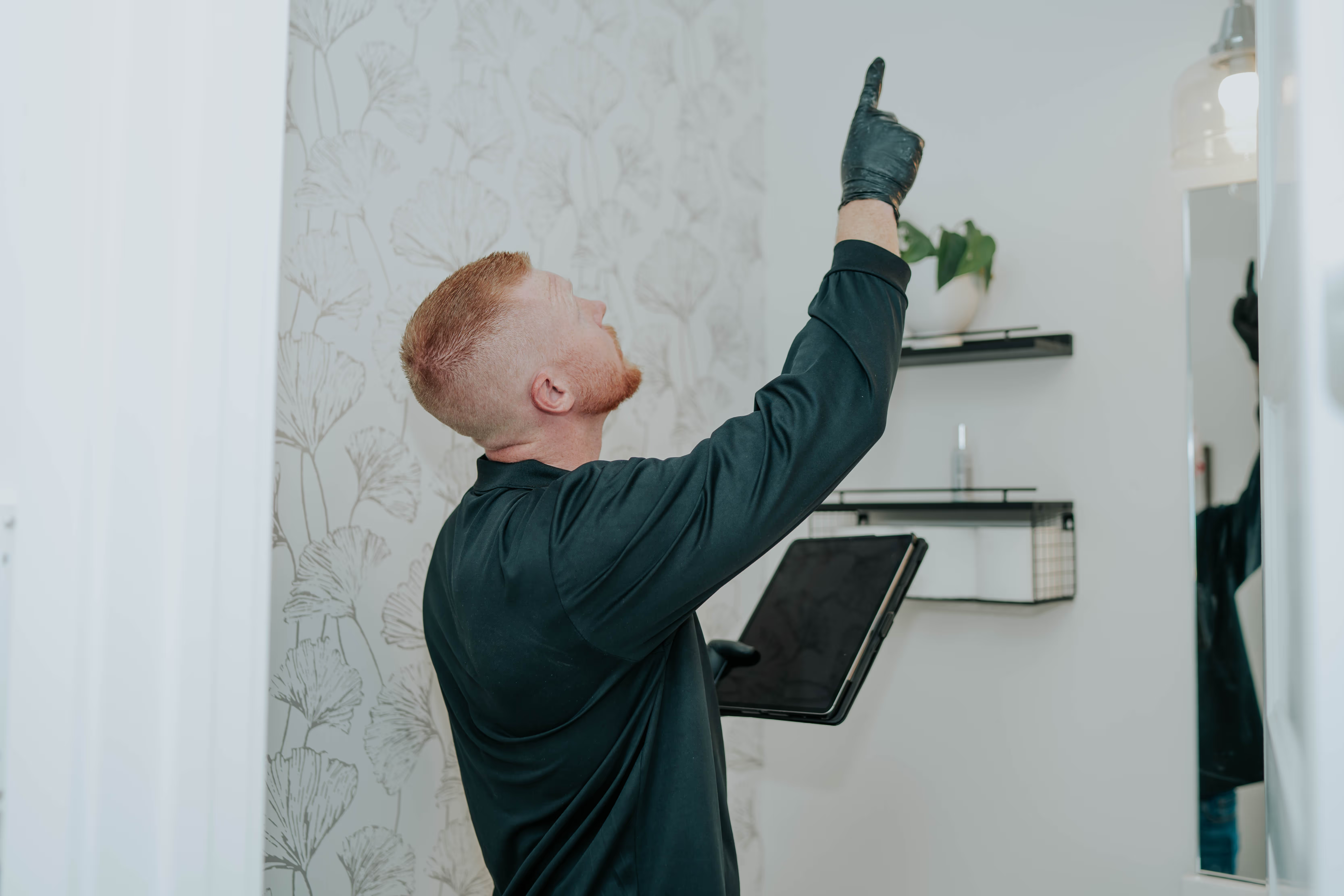
Pointing out a spot on a ceiling during a mold inspection Inspected by Jim & Karen
Inside the system

Mold settles behind the vents.

About 78% of homes in the city of Pueblo heat with gas, often through a furnace that pushes air along a network of ducts. Nearly three in four homes in the city were built before 1980, and older houses often have long duct runs with plenty of seams and bends.

When cooler air or summer condensation keeps the dust in those runs damp, these are the places Jim and Karen check first:

  • The boots behind supply registers, especially ceiling vents under a roof cooler
  • The cooler's duct as it drops through the attic
  • Return grilles and the filter slot, where dust piles up
  • The furnace's air handler and the plenum above it
Who does what

Your contractor fixes the water. Jim and Karen treat the mold.

HVAC mold can involve up to three trades. Here's how the work splits, so you know who to call for each part.

The job
Jim & Karen
Cooler or HVAC tech
Duct cleaner
Air samples to an independent labBefore treatment and after it
–
–
Fixes leaks, drains, pads and relief ventsThe source of the water
Removes dust and debris from the ductsBrushes and vacuum
–
Treats mold in the ducts and the rooms togetherIn one visit, in most homes
The process

From the first look to the lab report.

Four steps, and the second one belongs to whoever services your cooler or HVAC system.

  1. 01

    Jim and Karen look first

    They look at the registers, the cooler duct and the air handler to find where the water is getting in. Air samples go to an independent lab.

  2. 02

    The water gets fixed

    Your cooler or HVAC contractor fixes whatever is letting water in. Once the moisture source is dealt with, Jim and Karen treat the mold.

  3. 03

    Treatment day

    VaPURE moves through the ducts the way air does and into the rooms they serve, and an antimicrobial protectant goes on after it. The home has to be empty during the VaPURE treatment, with people, pets, and plants out. Most families are back the same day.

  4. 04

    The lab checks the result

    A second set of air samples goes to the same independent lab, and you get the written report. We guarantee indoor mold levels will be lower than outdoor levels after treatment, or we retreat at no additional cost.

Frequently asked

Questions about coolers, ducts and mold.

No. Jim and Karen treat mold inside the ducts with VaPURE and leave the ductwork where it is. If a section is too damaged, such as soaked duct board or a crushed flex run, they'll tell you and point you to someone who handles that.
The pads, pan, float and water line belong to whoever services your cooler. Jim and Karen treat mold in the ducts and rooms the cooler feeds once the water problem has been fixed.

If mold is still growing in the ducts, the system can carry spores back into the rooms each time it runs. That's why Jim and Karen treat the duct system and the rooms it serves in the same visit.

The active component of our sterilant is on the EPA's Safer Chemical Ingredients List. Shortly after treatment it breaks down into acetic acid (the acid in white vinegar), oxygen and water.

Schedule your free consultation

Tell us when the smell shows up.

The first step is a free phone consultation. Tell us when the odor appears and what kind of cooler you run, and we'll say whether an inspection makes sense. Treating the ducts often sits inside a wider plan for mold remediation in Pueblo, because spores from the ducts settle in the rooms they serve.

Or call us directly (719) 738-8303
Where We Work

We serve the homes of Pueblo County & Southern Colorado.

A small, senior team — so we treat each home like the only one we're working on this week. Currently accepting new clients across Pueblo County & Southern Colorado.

Pueblo

Belmont · Mesa Junction · Bessemer · Aberdeen · University Park · Sunset Park

This week
Nearby Cities

Pueblo West · Colorado City · Beulah · Boone

This week
Counties Served

Pueblo County · Fremont County · Custer County · Teller County · Huerfano County · Costilla County

This week
Service coverage
Pueblo County & Southern Colorado